

- This event has passed.
Deciphering the Complexity of Adhered Veneer Wall Systems 1.0 CEU/HSW
March 5 @ 1:00 pm - 2:00 pm EST
Deciphering the Complexity of Adhered Veneer Wall Systems
Adhered veneer cladding systems have gained popularity in the past decade with increased use in all climates across the county. Today this type of construction is not only seen on high-end residential, but a common facade element on educational institutions, hospitals, airports and other commercial type buildings. While adhered veneer wall system have garnered the derogatory “lick and stick” label and are historically seen as economical, value engineering options, these systems have evolved significantly, as well as the codes and standards used to design and construct them. With the increased complexity of adhered veneer systems, deciphering the multiple building codes, standards, industry guidelines, and manufacturer’s installation instructions can be challenging. Drawing on WJE’s extensive experience investigating failures of these systems, this presentation will highlight code-compliance pathways, key resources available for design and construction, and general strategies to achieve a successful adhered veneer installation; inclusive of field testing and evaluation strategies.
Learning Objectives:
- List the design requirements between prescriptive design versus engineered design for adhered veneer systems
- Identify industry guides and standards (i.e., ASTM/ANSI) related to adhered veneer products and installation of adhered veneers.
- Describe at least three of the most common failure mechanisms of adhered veneer systems.
- Summarize key quality control steps to consider during construction that can lead to a successful installation.
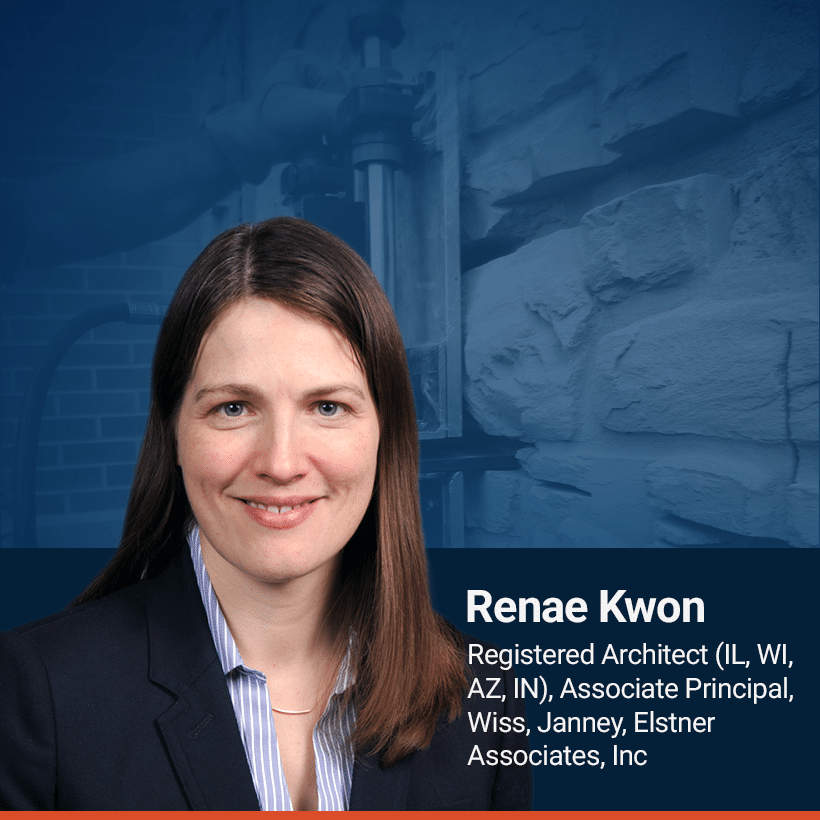
Renae Kwon, Register Architect (IL, WI, AZ, IN), Associate Principal, Wiss, Janney, Elstner Associates, Inc
 Renae Kwon is an Associate Principal with the interdisciplinary engineering, architecture, and material science consulting firm of Wiss, Janney, Elstner Associates Inc. Ms. Kwon is a licensed architect, with experience in repair and rehabilitation of various types of facades and building envelopes as well as design peer review of building enclosure for new construction. Her focus of materials includes masonry, stone and windows of both contemporary and historical structures.